
KPOP Sandbox: Demon Hunters
Q8PowerSimulation
3.91.00 Reviews
- Version
- 3.2
- Installs
- 100.00K
- Age Rating
- Everyone
Screenshots
Our Review of KPOP Sandbox: Demon Hunters
 Analysis by Appyee
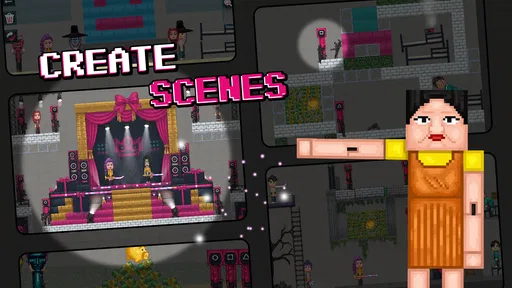
I spent time with KPOP Sandbox: Demon Hunters, a free simulation game from Q8Power that turns a playful physics playground into its main attraction. The idea is simple to understand but surprisingly open-ended: you build scenes, place characters or objects, and watch ragdoll movement create the action. Instead of following a fixed campaign, I found myself making small experiments, arranging battles, and resetting situations just to see how the physics changed the result.
That freedom is the reason I would recommend it to certain players, especially anyone who enjoys toy-box games more than traditional level-based challenges. It is also the reason I would not recommend it to everyone. There is no obvious substitute for a carefully designed puzzle, a deep management simulation, or a polished action game if that is what you want. This is best understood as a casual creative sandbox where the fun comes from setting up a situation and seeing what happens.
What the current version feels like to play
The current release is version 3.2, and that matters because a sandbox game lives or dies by how comfortable it feels to experiment. I found the basic loop easy to pick up: enter the playground, arrange a scene, interact with the available elements, and observe the results. The lack of a strict objective can feel liberating when I want a short distraction, but it can also leave me wondering what to do next after the novelty of the first few setups fades.
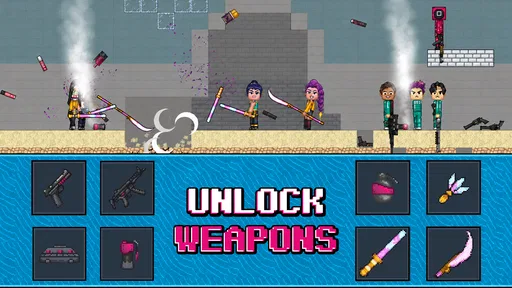
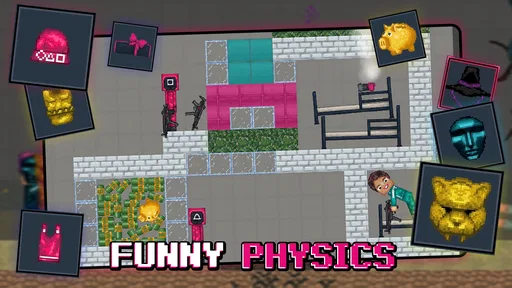
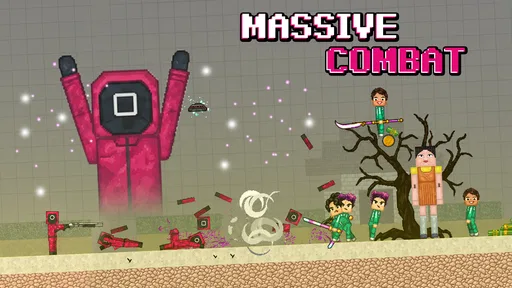
The physics are the star. Ragdoll movement gives every encounter an unpredictable quality, so even a simple arrangement can turn into a funny collapse or an unexpectedly effective attack. I liked that the game does not require me to treat every scene as a serious challenge. I can build something dramatic, test it, change one detail, and immediately try again. That quick reset-and-adjust rhythm is more important here than long-term progression.
The title’s KPOP theme gives the sandbox its identity, while the demon-hunter framing adds a clear imaginative direction for battles and scenes. I approached it less like a conventional story-driven game and more like a set of movable pieces for creating short visual moments. Players who enjoy inventing their own scenarios will probably get more from it than players waiting for a carefully paced narrative.
Because it is rated for Everyone, the game is positioned as an accessible experience for a broad audience. I still think younger players may need guidance with the open-ended nature of the play area, not because the controls are especially complicated, but because a sandbox does not always explain what to try. A child who likes experimenting may be entertained for a long time; a child who expects clear missions may lose interest sooner.
How I use it in an ordinary day
My most realistic use case was a short break rather than a long gaming session. I could open it while waiting for an appointment, create a quick demon-hunter confrontation, test the arrangement, and close the game without feeling that I had abandoned a mission. That makes it more convenient than a story game that expects me to remember objectives or complete a level before stopping.
For a longer session, I needed to give myself a theme. For example, I might build a defensive scene, place the characters in positions that create a bottleneck, and then adjust the layout after watching the first clash. Giving myself a small design goal made the open space feel more purposeful. Without that self-imposed structure, the experience can become a sequence of random taps rather than meaningful play.
A useful approach is to change only one element at a time. If I move several objects and alter the starting positions together, I cannot tell what caused the new result. Treating each attempt like a tiny physics experiment makes the game more satisfying and helps reveal how the sandbox responds. This is one of the better ways to get beyond the first impression.
What the developer’s update path suggests
Q8Power has brought the game to version 3.2, so the product is not sitting at its earliest release state. The game was released on August 10, 2026, and the current version gives existing users a clear point of reference when deciding whether to return. I would treat the version number as evidence that the experience has moved through development, but not as a promise that every personal request or missing feature has been addressed.
For someone installing it now, the practical benefit is starting with the current build rather than judging the game by an older first impression. Existing players should still keep their expectations measured: a newer version can improve the experience without changing the fundamental identity of the game. This remains a ragdoll sandbox first, not a completely different genre hidden behind an update.
The game requires Android 7.0 or later, which keeps it available to many older devices. That is helpful if I want to try it on a spare phone rather than a recent flagship. At the same time, physics-heavy scenes can naturally become more demanding as I add more activity, so I would begin with smaller setups on older hardware and increase the complexity gradually. That is a sensible way to avoid confusing a crowded experiment with a problem in the game itself.
Its free price also lowers the barrier to testing it. I can find out whether the sandbox suits me without committing money first. The trade-off is that free games often compete for attention through repeatable play rather than a single polished journey, and this title is clearly built around returning to create another scene. If I want a self-contained adventure with a strong ending, I would look elsewhere.
Who gets the most from the sandbox
I think the strongest audience is made up of players who enjoy creative control, slapstick physics, and short experiments. It can work well for someone who likes watching chain reactions, arranging characters in unusual positions, or inventing battles that the game itself does not need to spell out. The KPOP and demon-hunter setting gives those experiments a recognizable flavor instead of leaving the playground completely abstract.
It is also a reasonable choice for casual players who do not want complicated onboarding. The core appeal can be understood quickly, and there is no need to study a large rule system before trying something. I would recommend it to a friend who likes mobile games that can be opened for a few minutes and enjoyed through trial and error.
I would be more cautious about recommending it to competitive players. The physics can make outcomes feel amusingly unpredictable, but that same unpredictability is not ideal for someone seeking precise balance or a serious ranking system. Likewise, players who want a rich management layer, carefully tuned resource decisions, or a long campaign may find the playground too loose.
The average rating is 3.9 from around 33 ratings, with one written review shown alongside it. I would read that as a modest sign of interest rather than a definitive verdict. The game has passed 100K installs, which suggests that enough people are willing to try its particular style, but popularity alone does not guarantee that its open-ended format will suit every player.
Small techniques that make experimentation better
My first useful technique was to build scenes in layers. I started with the environment and starting positions, watched the first movement, and only then added more action. This prevents the screen from becoming visually confusing and makes it easier to understand the physics. It also helps when I want to recreate a funny result instead of relying entirely on chance.
My second tip is to use the game as a storytelling tool. Rather than asking whether I have “won,” I can decide what the scene is supposed to communicate: an ambush, a rescue, a failed defense, or a chaotic performance. The demon-hunter theme supports this kind of miniature storytelling, while the KPOP angle can encourage more theatrical setups. This approach gives the sandbox a purpose without pretending it has a conventional campaign structure.
A third insight is that failure is often the content. In a standard action game, a ragdoll collapse may mean I made a mistake. Here, a badly timed collision can be the most entertaining part of the attempt. I learned to avoid resetting immediately after something goes wrong. Watching the full chain of movement can reveal a better scene than the one I originally planned.
There is also a practical balance between spectacle and control. Larger, busier setups may look more exciting, but they are harder to read and harder to reproduce. Smaller scenes let me see why a character falls, where an impact begins, and which placement created the result. If I am trying to learn the game rather than simply create noise, restraint works better.
Where the experience still falls short
The biggest limitation is the absence of a strong built-in reason to keep playing once I have explored the basic interactions. A sandbox can provide endless possibilities, but it cannot guarantee endless motivation. I sometimes wanted clearer prompts or structured challenges to turn the playground into a more directed experience. Players who need goals supplied by the game may feel that they are doing all the work.
The physics are entertaining, but unpredictability can also reduce precision. When I want a result to happen in a particular way, a small change in position may produce a very different outcome. That is part of the charm, yet it can become frustrating if I am trying to stage a repeatable sequence. The game is better at surprising me than at delivering exact control.
The theme may also divide players. The KPOP and demon-hunter presentation gives the game a memorable identity, but anyone uninterested in that combination may see it as decoration rather than a reason to play. A more neutral physics sandbox could appeal to a wider audience, while a more deeply themed game could offer stronger world-building. This title sits between those possibilities.
I would also avoid expecting the depth of a full simulation. The word “sandbox” can suggest a large system with complex interactions, while the real pleasure here is closer to playful scene construction. If I approach it expecting detailed engineering, advanced strategy, or a broad set of interconnected mechanics, I am likely to be disappointed. Its value comes from immediacy and experimentation, not from modeling every consequence.
How it compares with familiar alternatives
Compared with a traditional mobile action game, this one gives me more freedom but less direction. An action game usually tells me where to go, what to defeat, and how to improve. KPOP Sandbox: Demon Hunters asks me to create the situation myself. That makes it more relaxed and replayable in short bursts, but less satisfying for anyone who wants a clear progression path.
Compared with a puzzle game, the physics here are less predictable and the solutions are less formal. A puzzle rewards discovering the intended answer; this sandbox rewards trying a strange idea and seeing whether it produces an entertaining result. I would choose the puzzle alternative when I want mental precision, and this game when I want playful trial and error.
Compared with a management simulation, it has a much lighter commitment. I do not need to maintain a long-running operation or make complex economic decisions to enjoy a session. That makes it easier to pick up, but it also means there is less reason to return for strategic development. The right choice depends on whether I want a toy box or a system to manage.
Compared with a physics playground without a theme, this game benefits from its KPOP and demon-hunter framing. The setting gives me prompts for the scenes I create, even when the game is not forcing a story. The trade-off is that the theme will not appeal equally to everyone. For me, it makes the experiments feel more distinctive than anonymous objects colliding on a blank screen.
What existing players should expect next
For current users, the sensible way to approach version 3.2 is as the present form of the same core idea: build, arrange, and observe. I would not return expecting the game to suddenly become a mission-driven adventure. Instead, I would revisit it when I want to test a new setup, use the physics for a short creative break, or see whether a familiar scene behaves differently after I change its layout.
New players should begin with a small experiment rather than trying to fill the playground immediately. Spend a few minutes learning how placement affects movement, then create a simple themed encounter. This makes the first session less chaotic and gives a clearer sense of whether the game’s particular kind of freedom is enjoyable.
What I would watch in future development is not just more content, but better support for the creativity already present. Clearer ways to organize experiments, stronger optional challenges, or tools that help reproduce an interesting scene would make the physics more useful without removing their unpredictability. Those additions would address the main weakness: the game can generate moments, but the player must supply much of the structure.
For now, my recommendation is straightforward. Try it if you like ragdoll physics, themed battles, and open-ended mobile play. Skip it if you need a campaign, competitive balance, or a deep simulation with carefully defined goals. I enjoyed it most when I treated it as a pocket stage for building ridiculous little scenes, not as a conventional game that owed me a checklist of missions.
KPOP Sandbox: Demon Hunters is at its best when I give it a simple idea and let the physics make the final decision. That balance between intention and surprise is its real personality. It will not replace a polished action game or a demanding strategy title, but as a free, accessible simulation playground from Q8Power, it offers a distinctive way to spend a few minutes creating chaos and seeing where it leads.
Verdict
Strengths of KPOP Sandbox: Demon Hunters
- Creative sandbox gameplay with a distinctive K-pop supernatural theme.
- Easy-to-learn controls make it accessible for casual players.
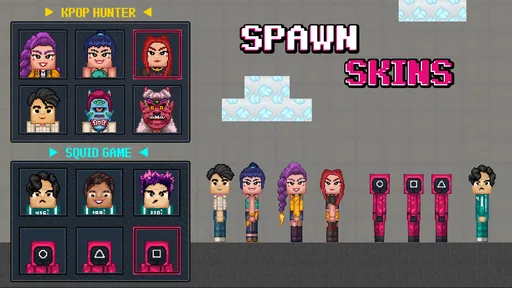
- Character customization adds personality to your demon-hunting team.
- Short play sessions work well for mobile gaming.
- Colorful visuals and music-inspired presentation feel lively and engaging.
Limitations of KPOP Sandbox: Demon Hunters
- Some missions may feel repetitive after extended play.
- Progression can become slower without frequent upgrades.
- The small-screen interface may feel crowded during busy encounters.
- Players may encounter ads or optional purchases during gameplay.
- The niche theme may not appeal to players unfamiliar with K-pop.
Other Releases by Q8Power
View All
Noob Battle: War Sandbox
Simulation0.0
Similar Picks in This Category
View All
Truckers of Europe 3
Wanda Software4.3

Town Building Life Simulator
XGame Global4.2

Fidget Toys Trading・Pop It 3D
Freeplay Inc4.7

Sculpt People
CrazyLabs LTD4.4

Scary Teacher 3D
Z & K Games4.2

Hair Tattoo: Barber Shop Game
CASUAL AZUR GAMES4.3
Frequently Asked Questions
What is KPOP Sandbox: Demon Hunters about?
KPOP Sandbox: Demon Hunters combines idol-themed entertainment with supernatural adventure. Players typically build and manage a team of K-pop-inspired hunters, improve their abilities, and battle demonic enemies through missions or stage-based encounters. The game focuses on colorful characters, collectible upgrades, strategic team choices, and a dramatic pop-music atmosphere. Before downloading, remember that the exact content and available features may vary depending on the version and platform.
Is KPOP Sandbox: Demon Hunters free to download and play?
The game is generally presented as a free-to-download mobile title, allowing players to install it without paying an upfront purchase price. However, free access may be supported by advertising, optional in-app purchases, or both. These purchases can provide resources, character improvements, cosmetic items, or faster progression. It is a good idea to review the store listing and configure purchase restrictions, especially if children may use the device.
Does KPOP Sandbox: Demon Hunters require an internet connection?
An internet connection may be needed for several important functions, such as downloading game data, synchronizing progress, displaying advertisements, receiving updates, or accessing events and online rewards. Some basic gameplay could work offline, but this should not be assumed for every mode. If you plan to play while traveling or with limited data, check the current store description and test the game after installation before relying on offline access.
Is the game suitable for children and younger players?
KPOP Sandbox: Demon Hunters uses a stylized fantasy setting in which characters fight demons and other supernatural enemies. Although the visual presentation may be colorful and cartoon-like, it can still include combat, fantasy violence, advertisements, and optional purchases. Parents should check the age rating listed for their region, review the privacy information, and enable parental controls if necessary. The suitability of the game will depend on the child’s age and sensitivity to action themes.
What devices are compatible with KPOP Sandbox: Demon Hunters?
Compatibility depends on the operating system, device model, available storage, and the game version distributed through the official store. Older phones or tablets may install the title but experience slower loading, reduced visual quality, crashes, or battery drain. Before downloading, check the Android or iOS store page for the latest requirements and make sure sufficient free space is available. Installing updates is also recommended for improved stability and access to newly released content.
Play our best games!


